 Call: (937) 829-8873


-
Serving Dayton
Proudly serving Dayton, Ohio and surrounding areas.
-
Free Estimates
Quality work, on-time results, zero mess. Call or text (937) 829-8873.
 Serving Dayton
 Free Estimates
Popcorn Ceiling Removal in Dayton, OH
Say goodbye to dents, holes, and outdated textures. Of all the old textures in a house, the popcorn ceiling is the one people search for most. AMR Home Services takes popcorn off ceilings and smooths textured walls for homeowners in Dayton, Ohio and surrounding areas, then finishes the surface underneath ready for paint. Before anyone picks up a scraper, though, one question has to be settled. Call or text (937) 829-8873 to ask for a free estimate.
Is Your Popcorn Ceiling Asbestos?
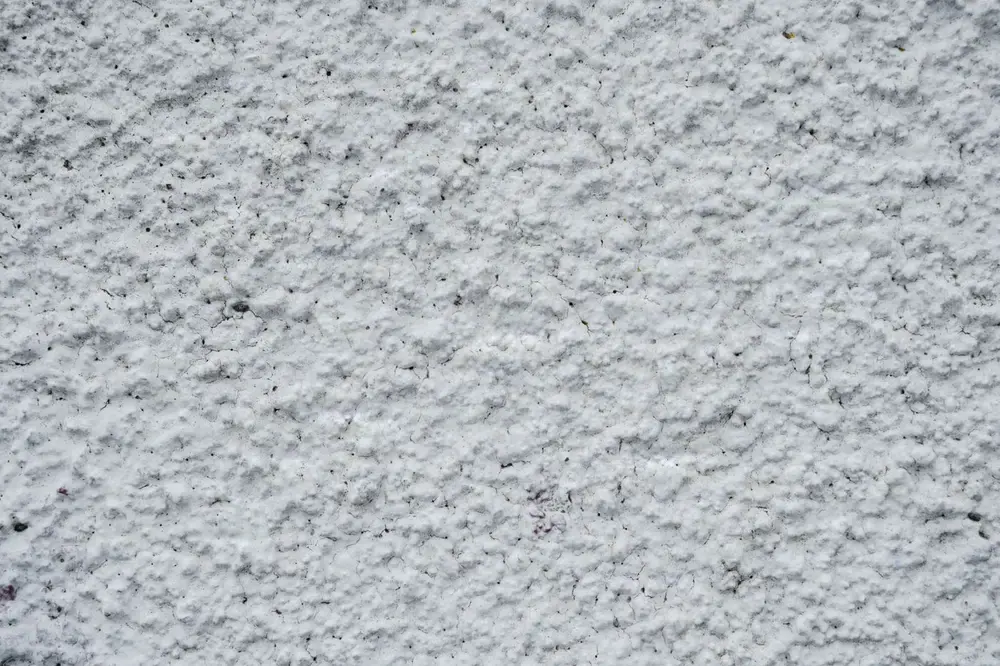
Popcorn texture, also called an acoustic or cottage cheese ceiling, is a coating sprayed onto the ceiling board. It hid seams and small flaws, softened echoes, and was popular in homes of that era, the building years of the 1970s and 1980s. Homes from those years are a large share of the housing around Dayton. The median home in Huber Heights was built in 1976, and in Beavercreek in 1979.
The question is what some of it was made with. The EPA's “Learn About Asbestos” page lists “Textured paint and patching compounds used on walls and ceilings” among the places asbestos may be found. Nobody can tell by looking. Only a lab analysis of a sample answers it.
The EPA's advice covers both sides. “Material that is in good condition and will not be disturbed ... should be left alone.” Before a remodel that disturbs it, “A trained and accredited asbestos professional should take samples for analysis,” and “Taking samples yourself is not recommended.” Scraping a ceiling disturbs every inch of it.
So the order is simple. If your ceiling could date from those years, have it sampled by an accredited asbestos professional before any work is booked. Testing, and the removal of a ceiling that tests positive, are jobs for asbestos professionals, not for painters. When the lab finds none, the texture can come down.
How a Popcorn Ceiling Is Removed, Step by Step
Removing popcorn is mostly preparation and repair. The scraping is the smallest part.
- Empty and seal the room. Furniture goes out, or is grouped in the middle and wrapped. Floors are covered, plastic sheeting is taped along the top of every wall, and doorways and air vents are sealed so the debris stays in one room.
- Wet the texture. Unpainted popcorn is misted with water from a pump sprayer and left to soak in. Wet texture comes off soft, with far less dust. A ceiling that was painted over sheds water, so it takes more soaking and harder scraping.
- Scrape. A wide scraper held at a low angle peels the texture off without digging into the paper face of the board.
- Bag the debris. The scrapings land on the plastic, which is folded up and bagged with them.
- Repair the board. Texture hid a lot. Gouges, torn paper, nail pops and roughly taped seams all come to light. Any tear is sealed with primer before compound goes on, or it bubbles. Our drywall repair page explains those fixes.
- Skim coat. Thin coats of compound over the rough areas, or over the whole ceiling.
- Prime and paint. Primer seals the new compound, and the ceiling gets a flat white finish.
Two things on your side help before the work starts. Pictures, curtains and small items come out of the room first. And the furnace or air conditioning stays off while the room is open, so dust is not pulled into the return vents and carried through the house.
Skim Coating a Ceiling Smooth
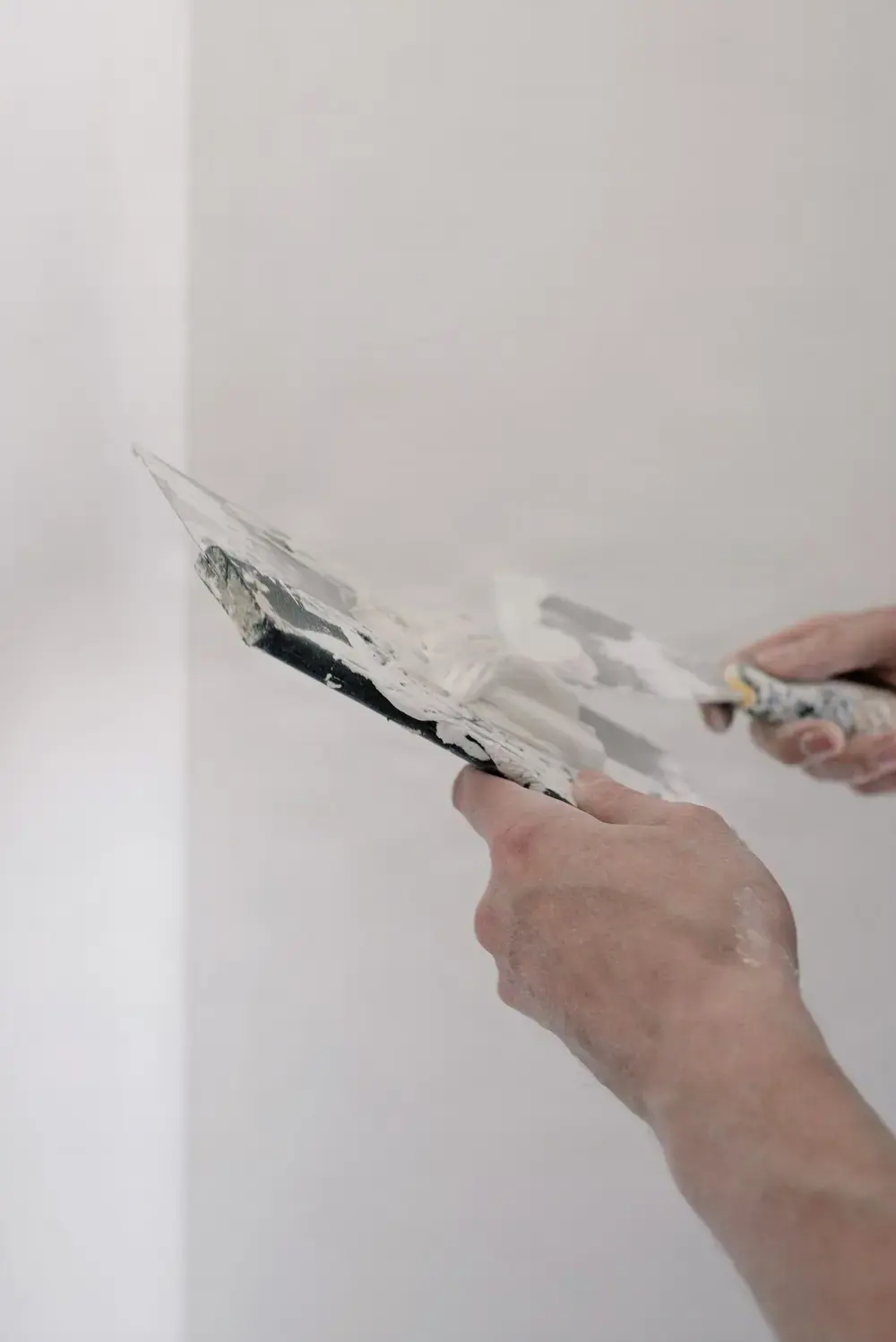
Under a popcorn ceiling, the drywall was often finished only roughly, because the builder knew the texture would cover it. Once the texture is off, those seams, fastener lines and old patches show, most of all in light from a window that skims across the ceiling.
A skim coat is a thin layer of joint compound spread over the whole surface with a wide knife or trowel, or rolled on and then smoothed flat. Each coat fills the low spots the last one missed. Between coats the ceiling is sanded lightly and checked with a bright lamp held close to the surface, the way side light will show it later. Two coats are common, three on a rough ceiling.
Drying is where Ohio weather matters. Joint compound dries by giving its water to the air. Dayton's summers are humid, with an average high of 84.4°F, its winters average 32.2°F, and the house spends half the year closed up and heated. Each coat has to dry fully before the next, and the compound and paint both go on with the room temperature and airflow their labels ask for. A coat put on over damp compound is where hairline cracks and soft spots start.
Smooth ceilings get flat paint for a reason. Flat reflects the least light, so it hides the small waves any hand-finished ceiling has. Our interior painting page covers the sheens for walls and trim.
Orange Peel, Knockdown and Other Wall Textures
Ceilings were not the only place texture went. Walls were often sprayed or troweled too.
- Orange peel. A fine spatter that looks like the skin of an orange.
- Knockdown. Larger splatters flattened with a wide knife before they set, leaving flat islands.
- Skip trowel and swirl. Hand-troweled patterns, heavier and less even.
Wall texture has nearly always been painted, often more than once, so it cannot be soaked off like unpainted popcorn. To smooth it, the high points are sanded down, glossy or loose paint is primed, and the wall is skim coated like a ceiling, then sanded, primed again and painted. The other choice is to keep the texture and match it, so a patched spot blends in. Textured paint is on the EPA's list too, so the same asbestos caution applies to older textured walls.
Covering vs Removing a Popcorn Ceiling
Removal is not the only answer, and sometimes it is not the right one. These are the four choices.
- Leave it. If it may contain asbestos, is in good condition and nothing will disturb it, that is the EPA's advice.
- Paint it. Popcorn can be painted, ideally with a sprayer, since a roller can pull loose texture down. Paint makes later removal harder, because water no longer soaks in.
- Cover it. New drywall can be screwed through the old ceiling into the joists, then taped and finished. Screws through the texture disturb it, so the asbestos question comes first here too. The drywall installation page explains how new board goes up.
- Remove it. Scrape, repair, skim coat, prime and paint, for a ceiling that is smooth into every corner.
A popcorn ceiling with a brown stain or a sagging patch has a different problem first: water from above. That leak is fixed by a plumber or a roofer, and the soaked board is replaced, before any texture work makes sense.
The price of popcorn ceiling removal comes from the ceiling itself: how many square feet, how high, whether it was ever painted, how much furniture has to move, and how much repair and skim coating the board underneath needs. Painting the walls in the same job makes sense, since the room is already covered and sealed.
Ready for a Smooth Ceiling?
Call or text (937) 829-8873 for a free estimate.
Questions We Hear a Lot

-
Only a lab can say. Popcorn texture was popular in homes of the 1970s and 1980s, and the EPA counts textured ceiling coatings among the places asbestos may be found. An accredited asbestos professional should take the sample, since the EPA advises against doing it yourself. Testing and any removal are work for asbestos professionals.
-
There is no flat rate, because ceilings differ. Size and height set the base, a painted texture is harder to soak and scrape, and the board underneath may need anything from a few patches to a full skim coat. Call or text (937) 829-8873 for a free estimate on your ceilings.
-
Yes, and it is the simpler route when the texture is sound and firmly attached. A sprayer is gentler on it than a roller. The trade-off is that painted texture no longer soaks up water, so taking it off later is harder.
-
Yes. Scraping, skim coating and sanding all send debris and dust down the walls, and ceiling paint can drip or spatter. Doing the ceiling first and the walls after means each surface is finished once, and the room is covered and sealed only once.
-
No. Our promise is quality work, on-time results and zero mess. We treat your home with care, leaving zero footprint behind when the job is done.
-
Yes. Call or text us at (937) 829-8873 for your free estimate.
-
We proudly serve Dayton, Ohio and surrounding areas. Call or text (937) 829-8873 to check your location.
Ready to Get Started?
Call or text AMR Home Services at (937) 829-8873 for a free estimate.
-
- Service Area Dayton, Ohio
& surrounding areas - Working Hours Mon–Sun: 7 AM–9 PM
-


