 Call: (937) 829-8873


-
Serving Dayton
Proudly serving Dayton, Ohio and surrounding areas.
-
Free Estimates
Quality work, on-time results, zero mess. Call or text (937) 829-8873.
 Serving Dayton
 Free Estimates
Cabinet Painting in Dayton, OH
Transform your kitchen without the cost of a full remodel. Painting the cabinets you already have is a way to modernize your space, brighten your home and change how the whole room feels, all without the weeks of construction chaos that come with tearing boxes off the wall. AMR Home Services paints kitchen cabinets for homes in Dayton, Ohio and the surrounding areas. Our team handles all the prep, priming, and precision painting to give your cabinets a flawless, factory-smooth finish that lasts.
Cabinet Painting in Dayton, OH
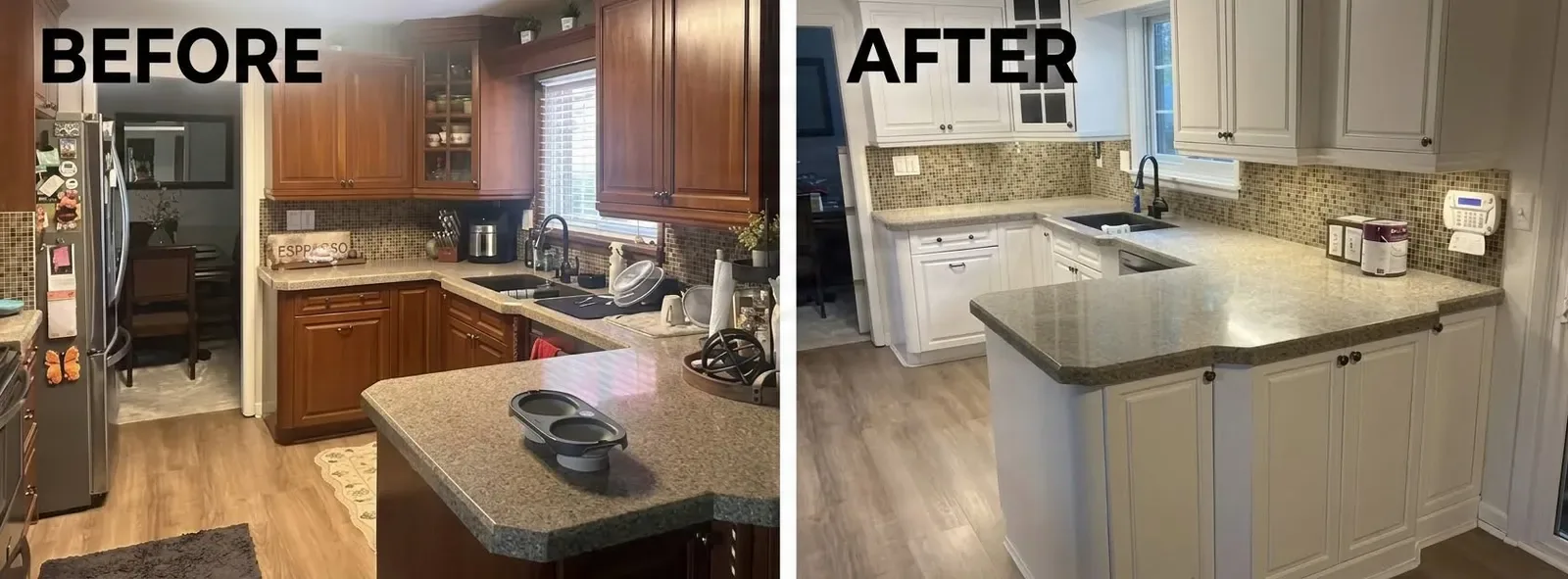
From dated to absolutely stunning: that is how we put it in one of our own posts, and it is the change most people want from painted cabinets. Kitchens around Dayton show when they were last redone. In the city itself the median home dates from 1951 (US Census, ACS 2024 5-year estimates), so most kitchens have been remodeled at least once. In newer cities such as Beavercreek, where the median home is from 1979, many kitchens still have the honey oak cabinets that were standard in homes of that era.
In both cases the cabinet boxes are often solid. What looks tired is the finish: an orange cast on oak, worn edges by the sink, chipped corners on drawer fronts, a color from another decade. If the doors, drawers and boxes are sound, painting keeps all of it and changes only the part you see. Good candidates are solid wood and wood veneer cabinets, MDF doors, and laminate that is still firmly stuck down. Cabinets with swollen bottoms under the sink, peeling vinyl skins or broken face frames need repair or replacement before paint can help.
Is Cabinet Painting Worth It? Painting vs Refinishing, Refacing or Replacing
There are four ways to change how cabinets look, and they differ in how much of the kitchen they disturb:
- Painting. Doors, drawer fronts, face frames and visible sides are cleaned, sanded, primed and painted a new color. The layout, boxes and countertops stay.
- Refinishing. Usually means stripping the old finish down to bare wood, then staining and clear-coating it again. It keeps a wood look, but it only suits real solid wood, and stripping a whole kitchen is a much messier job.
- Refacing. New doors and drawer fronts, with a veneer applied over the old face frames. You get a new door style, but it is a different trade from painting.
- Replacing. The old cabinets come out, which usually means new countertops, disconnected plumbing and appliances, and a kitchen you cannot use while the work goes on.
So is cabinet painting worth it? It is when the cabinets are in good shape and you like the layout but not the look. It is not the answer if the boxes are falling apart, if you want a different layout, or if you want a stained wood look. Refinishing or new cabinets are the honest answers then, and we will tell you which yours need when we give you the estimate.
“They provide excellent customer service and take pride in their work. They are professional, reliable, hardworking, and pay close attention to every detail.”
Riahaaa Ł., Google review
How We Paint Kitchen Cabinets, Step by Step
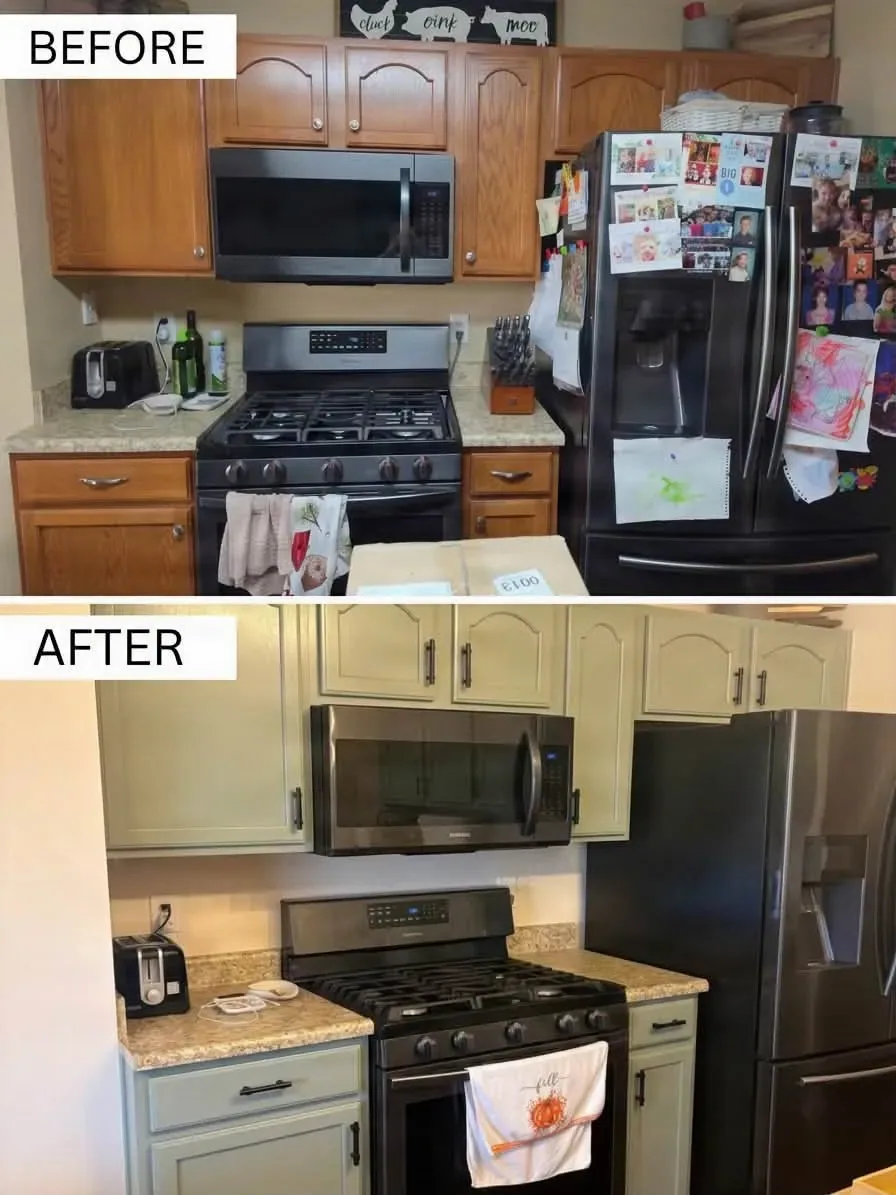
A cabinet finish fails at the prep, not the paint. Kitchen cabinets are handled every day, splashed, steamed and wiped, so each step counts:
- Cover and mask. Counters, floors and appliances are covered. Cabinet interiors are masked off, unless you want them painted too.
- Doors and drawer fronts off, labeled. Every door and drawer front is numbered to its opening, so it goes back exactly where it came from.
- Hardware off. Knobs, pulls and hinges come off rather than being painted around. If you are switching to new pulls with a different hole spacing, the old holes are filled now.
- Degrease. Kitchen grease and hand oil are hard to see, and they are the main reason paint peels off cabinets. Every surface is scrubbed with a degreasing cleaner and rinsed, above all near the stove and the handles.
- Repair and scuff-sand. Dings and gouges are filled. Then the old finish is scuff-sanded to a dull surface the primer can bite into.
- Bonding primer. A primer made to grip slick surfaces goes on next. On oak and other woods with tannins, it also stops stain bleeding through a light color.
- Thin coats. The color goes on in thin coats with a light sanding between them, not one heavy coat that sags and stays soft.
- Cure, then reassemble. Painted doors cure before they are hung, as the label directs. Cabinet paint that feels dry can still be soft enough to stick to a bumper or mark under a hinge. Then the hardware goes back on and every door is adjusted to close evenly.
Oak, Laminate and Painted Wood: What Each Needs
Oak and other open-grain wood
Oak has deep, open grain, and paint does not hide it: the texture still shows under a solid color. Some people like that, since it reads as painted wood. For a smooth, furniture-like face, the grain is filled with a grain filler or a high-build primer and sanded flat before the color goes on. That adds steps, so decide which look you want at the estimate.
Laminate and thermofoil
Laminate is a plastic face over particleboard. It can be painted, but only after a careful scuff-sand and a bonding primer, because ordinary paint sits on top of plastic and peels. Thermofoil, a vinyl skin over MDF that is common on white cabinets, is a different case. Once it lifts or bubbles near the stove or the dishwasher, paint over it will not hold, and those doors are better replaced.
Cabinets that are already painted
Old painted cabinets are checked for how well the existing paint sticks. Loose paint is scraped and sanded back to a sound edge. Many older kitchens have oil-based paint on the cabinets, which needs a bonding primer before a water-based coat can go over it.
In a house built before 1978, those older layers can include lead. The EPA notes that "In 1978, the federal government banned the sale of lead-based paint for use in homes," and its Renovation, Repair and Painting Rule covers paid work that disturbs painted surfaces in homes built before that year. Sanding and scraping old cabinets is that kind of work, so tell us the year your home was built when you ask for an estimate.
Kitchen Walls and Ceilings
Fresh cabinets make tired kitchen walls look worse, so many cabinet jobs take in the walls too. Steam, cooking grease and splashes mean they get the same degreasing as the cabinets, and a satin or semi-gloss sheen that can be wiped down. Walls around the range hood and above the sink often carry holes from old anchors, a removed backsplash or a moved cabinet, and those are filled and sanded flush first. The ceiling above the stove can hold a film of grease and yellowing that needs cleaning and a stain-blocking primer before the white goes back on.
If you are planning the walls as well, our interior painting page explains how a room is prepped and painted. Bigger wall damage, such as a torn patch of drywall where an old cabinet was anchored, is covered on our drywall repair page.
What Decides the Cost of Cabinet Painting
Every kitchen is priced on its own, and the estimate is free. What sets the price:
- The count. The number of doors, drawer fronts and visible cabinet sides, plus any island, pantry or built-ins.
- The material. Oak that needs its grain filled, laminate that needs a careful bonding prep, or wood that only needs a scuff and primer.
- The condition. Grease build-up, worn edges, water damage under the sink and old peeling paint all add prep.
- The color. Going from dark stained wood to white takes more primer and coats than a change between two light colors.
- Extras. Painted cabinet interiors, filled holes for new hardware, or the kitchen walls and ceiling at the same time.
Whether your kitchen is in Dayton or one of the cities nearby, call or text (937) 829-8873 and tell us about your cabinets.
Ready for a Kitchen You Love Again?
Call or text (937) 829-8873 for a free estimate.
Questions We Hear a Lot

-
It depends on the kitchen, and the estimate is free. The price is set by the number of doors and drawer fronts, the material (oak, laminate or painted wood), the condition of the old finish and how big the color change is. Call or text (937) 829-8873 and tell us about your cabinets.
-
It is when the cabinet boxes are solid and you like the layout but not the look. Painting changes the color and style of the kitchen while the boxes, counters and plumbing stay put. If the boxes are water damaged or you want a new layout, new cabinets are the better answer.
-
Refinishing usually means stripping the old finish and staining the bare wood again under a clear coat, so it keeps a wood look and only suits solid wood. Painting covers wood, MDF or laminate with primer and a solid color. Painting suits more kinds of cabinets; refinishing keeps the grain on show in a wood tone.
-
Paint alone does not hide oak's open grain: the texture still shows under the color. For a smooth face, the grain is filled and sanded flat before priming, which adds steps. Tell us at the estimate which look you want.
-
Yes. Call or text us at (937) 829-8873 for your free estimate.
-
No. Our promise is quality work, on-time results and zero mess. We treat your home with care, leaving zero footprint behind when the job is done.
-
We proudly serve Dayton, Ohio and surrounding areas. Call or text (937) 829-8873 to check your location.
Ready to Get Started?
Call or text AMR Home Services at (937) 829-8873 for a free estimate.
-
- Service Area Dayton, Ohio
& surrounding areas - Working Hours Mon–Sun: 7 AM–9 PM
-


