 Call: (937) 829-8873


-
Serving Dayton
Proudly serving Dayton, Ohio and surrounding areas.
-
Free Estimates
Quality work, on-time results, zero mess. Call or text (937) 829-8873.
 Serving Dayton
 Free Estimates
Interior Painting in Dayton, OH
Give your space a fresh, clean new look. AMR Home Services paints the inside of homes in Dayton, Ohio and the surrounding areas: walls, ceilings, trim, doors and the patching that comes before them. What we aim for in every room is sharp lines, smooth coats, and premium finishes. Estimates are free: call or text (937) 829-8873.
Interior Painting in Dayton, OH
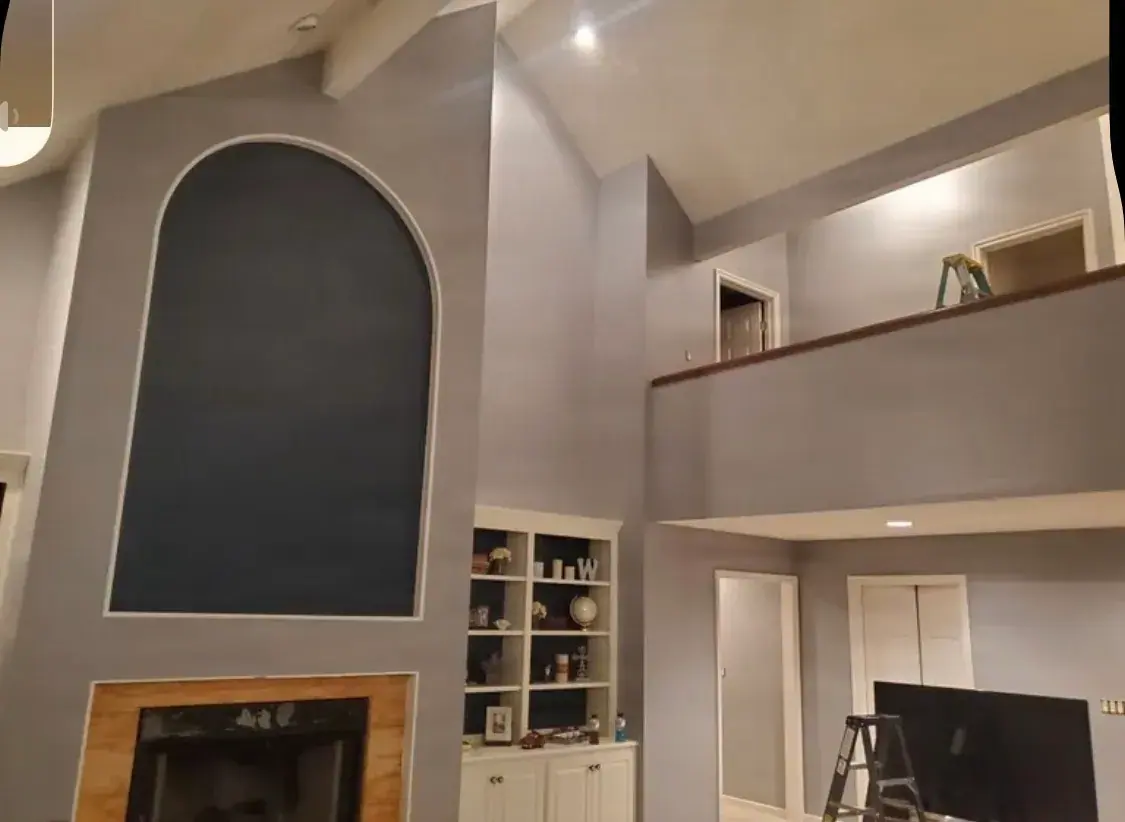
Most calls start with one room: a bedroom nobody has painted since the last owner moved out, a hallway covered in scuffs, a color that never felt right. Either way, a room has four surfaces, and it only looks finished when all four are done well:
- Ceilings. Usually a flat white, which hides small flaws and reflects light back into the room.
- Walls. The color you chose, in a sheen that suits how the room is used.
- Trim. Baseboards, door and window casings and crown molding, in a harder sheen that wipes clean.
- Doors. Both faces and the edges, so the door looks right whether it is open or closed.
The holidays are approaching, and family will soon be arriving. If guests are on the way, start with the rooms they see first: the entry, the living room and the guest room. When kitchen cabinets look tired next to fresh walls, our cabinet painting page explains how they are cleaned, primed and painted.
How We Prep and Protect Your Home
A paint job is mostly preparation. The last coat only looks as good as the surface under it. We handle all the prep, detail, and flawless drywall repair for you, in this order:
- Clear and cover. Furniture moves to the middle of the room or out of it and goes under plastic. Floors are covered with drop cloths edge to edge.
- Remove and mask. Outlet covers, switch plates and vent covers come off. Tape goes where paint must not: along floors, on hinges, on glass.
- Repair. Nail holes, dents and small cracks are filled, larger holes are patched, and every repair is sanded flush so it does not show through the new paint.
- Clean and scuff. Kitchen walls and the area around light switches carry grease and hand oil that paint does not stick to, so they are washed. Glossy trim is scuff-sanded so the new coat can grip.
- Prime where needed. Bare patches, water stains and big color changes get primer first. Without it, a patch "flashes" through the finish as a dull spot.
- Caulk. Gaps between the trim and the wall are caulked, so the paint line along the trim stays crisp.
We pride ourselves on efficient service that stays on schedule, and we treat your home with care, leaving zero footprint behind when the job is done. Drop cloths, plastic and tape leave with us, and covers and furniture go back where they were.
“I really love how fast his response time was in getting back to me. He got me a quote almost immediately, got me in very quickly to get the job done, and I was very excited to see what my house looked like after they were finished.”
Billie B., Google review
Ceilings, Walls, Trim and Doors: The Order That Works
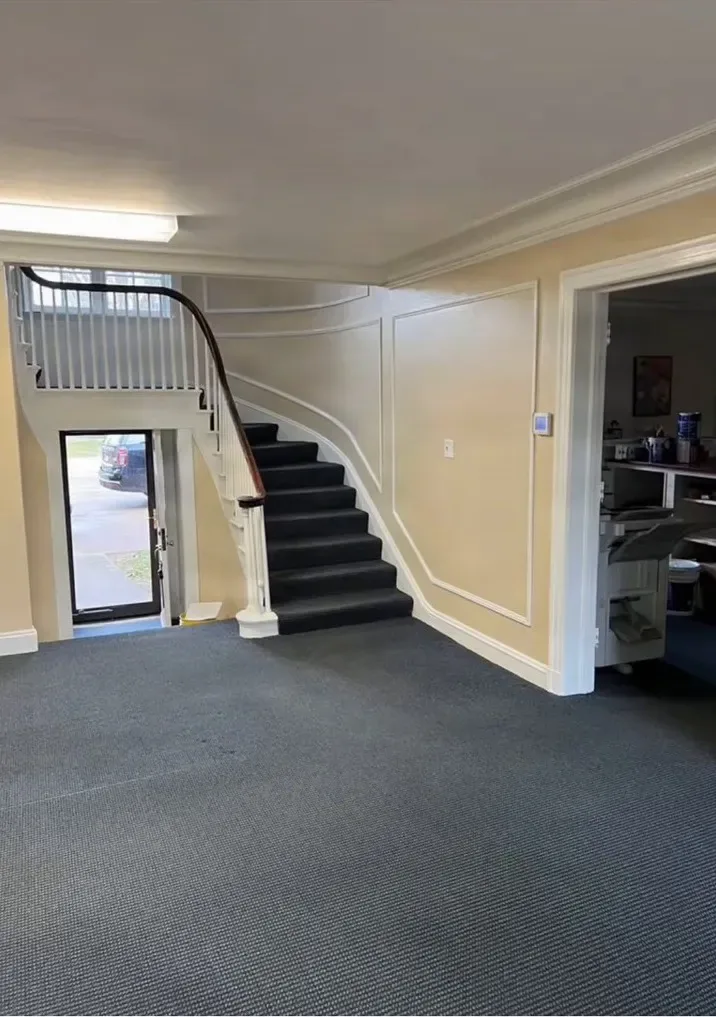
Painters work from the top of a room down. Rolling a ceiling throws a fine mist of spatter and the odd drip, and it lands on walls that have not been painted yet. The ceiling line is cut once, from the wall side, and the trim comes last so its edge can be cut clean against finished walls.
Cutting in for sharp lines
Cutting in is the brushwork along every edge a roller cannot reach: the ceiling line, inside corners, around windows, doors and outlets, and along the baseboard. A steady hand and a good angled brush give a straight line without relying on tape alone, and it is the part of a paint job you notice from across the room.
Rolling for smooth coats
Walls are rolled in sections while the cut-in edge is still wet. Keeping that wet edge stops lap marks and the "picture frame" look, where a band of brushed paint around the edges dries a different sheen from the rolled middle. Two coats are the norm: the first covers, the second evens out the color and the sheen.
Trim and doors
Panel doors are painted in an order that follows the panels, rails and stiles, so the brush marks run with the wood. A door with years of drips built up on its edges is sanded back first so it still closes cleanly.
Choosing a Sheen: Flat, Eggshell, Satin or Semi-Gloss
Sheen is how much light dried paint reflects. It changes both the look of a room and how well a surface stands up to cleaning. In normal trade practice:
- Flat or matte for ceilings and quiet rooms. It hides small dents and patch lines, but it marks more easily.
- Eggshell for most walls: living rooms, bedrooms, dining rooms. A soft glow, and it takes a gentle wipe.
- Satin for hallways, kids' rooms, kitchens and bathrooms, where walls get touched and need washing.
- Semi-gloss for trim and doors: hard, wipeable and easy to keep clean.
The higher the sheen, the more it shows what is underneath. On an old wall with a few patches, eggshell often looks better than satin.
Paint also dries to the touch long before it cures, or hardens all the way through, and each label gives its own recoat and cure times. Dayton's weather affects both. NOAA's 1991-2020 normals for Dayton International Airport show 11.05 inches of rain from June through August, and humid air slows drying. They also count 109.9 days a year with a low at or below freezing, so the house is closed up and heated for half the year. Paint should go on and dry with the temperature and airflow its label asks for. Until the label's cure time has passed, treat fresh walls gently: no scrubbing, no tape.
Painting Older Dayton Homes
Dayton's houses are old. The US Census (ACS 2024 5-year estimates) puts the median home in the city at 1951, and 85.4% of Dayton homes were built before 1980. In Kettering, next door, the median home is from 1961. A house that age has been painted many times. The layers can hide cracked patches and failing older coats, and glossy oil paint on old trim will shed new latex unless it is scuff-sanded and given a bonding primer first, so old trim paint is tested for oil or latex before anything goes over it.
About half of Dayton's homes (48.4%) were built before 1950, and many of those have plaster walls, not drywall. Plaster cracks and patches differently, so please mention it when you call. Our drywall repair page explains the difference.
Age also raises the question of lead. In the EPA's words, "In 1978, the federal government banned the sale of lead-based paint for use in homes," and "approximately three-quarters of the homes in the United States built before 1978 still contain some lead-based paint." The EPA's Renovation, Repair and Painting Rule sets requirements for paid work that disturbs painted surfaces in homes built before 1978, and sanding and scraping are the steps that disturb old paint. Tell us the year your home was built when you ask for an estimate.
What Decides the Cost of Interior Painting
Every job is priced on its own, and the estimate is free. What moves the price:
- Size and height. How much wall and ceiling there is, and how high the ceilings are. A stairwell or a vaulted ceiling needs ladders and planks.
- What gets painted. Walls only, or walls, ceilings, trim and doors. Trim and doors take more brushwork per foot than open wall.
- Condition. The number of holes, cracks, stains and old patches, and whether old glossy paint needs sanding and priming.
- Color change. Dark red to white, or white to navy, takes a tinted primer or an extra coat.
- How full the room is. Furniture, shelves and wall hangings to move and protect.
Some rooms need more than paint. A stained or heavily textured ceiling may be better smoothed before it is painted, and our popcorn ceiling removal page covers that. Wherever your home is, in Dayton or one of the cities around it, call or text (937) 829-8873 and tell us about the rooms.
Which Room Is Next on Your List?
Call or text (937) 829-8873 for a free estimate.
Photos From Our Jobs
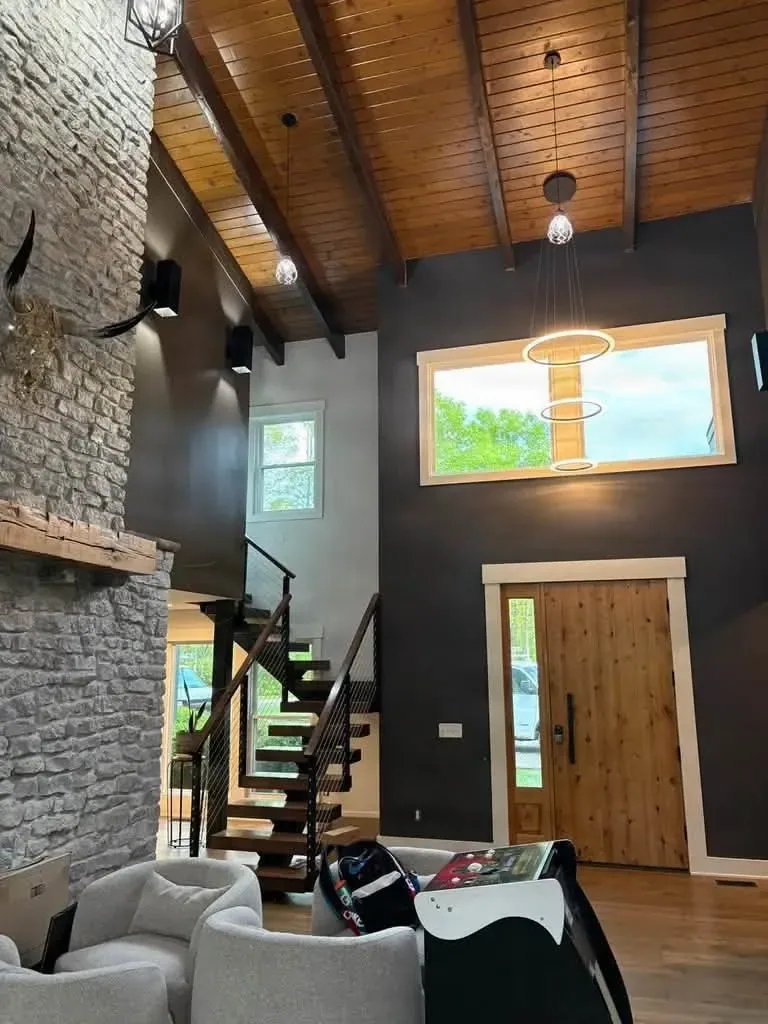
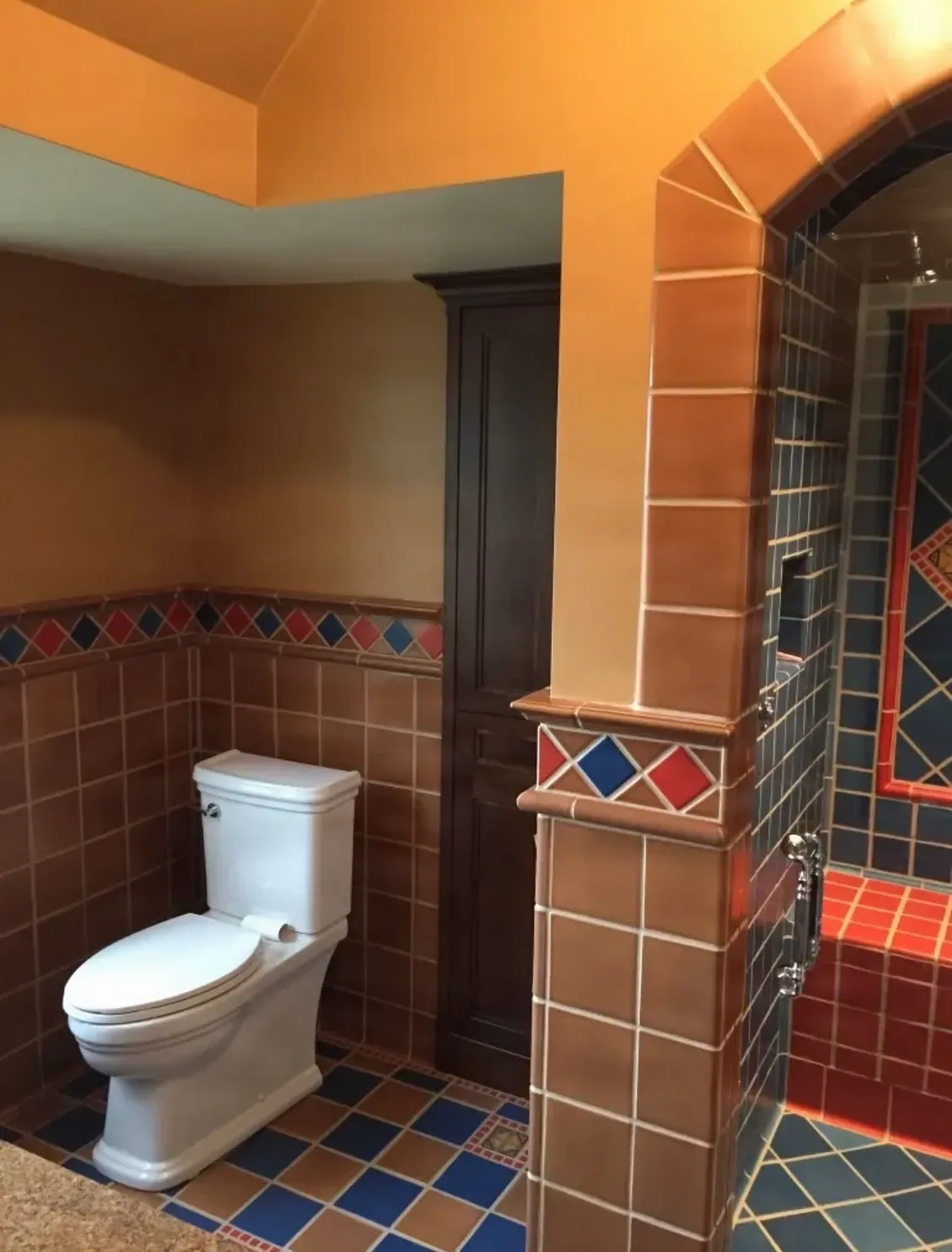
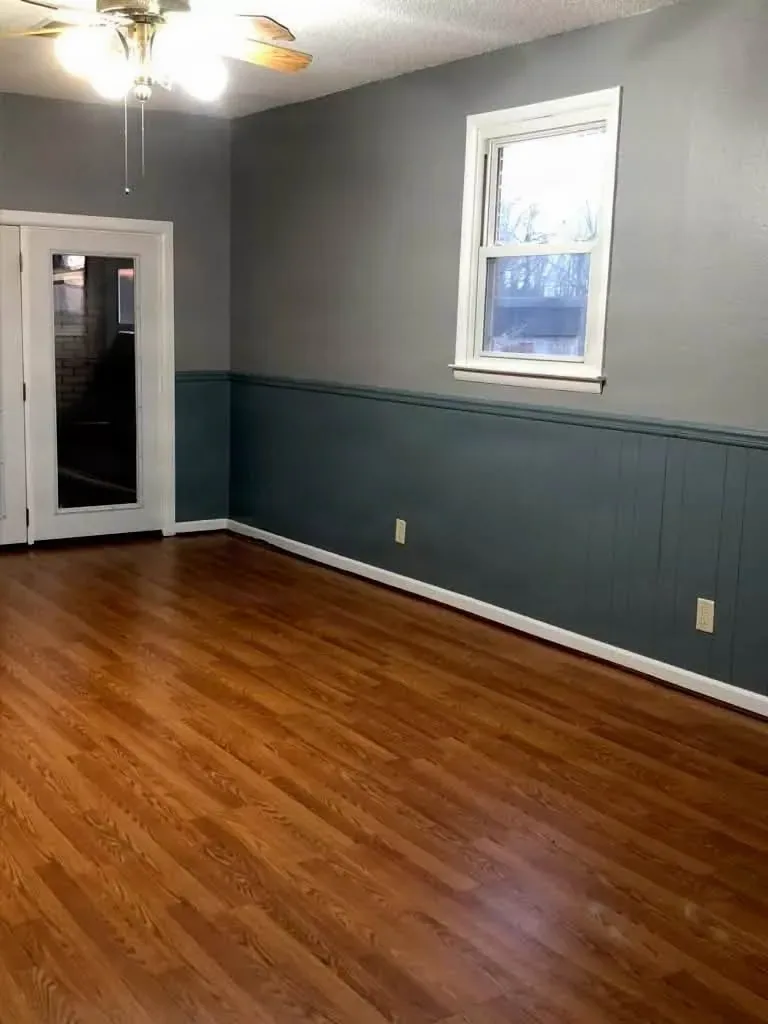
Every photo here is from one of our own jobs. Tap one to see it bigger.

Questions We Hear a Lot

-
It depends on the job, which is why every estimate is free. The price comes from the size of the rooms and the ceiling height, which surfaces get painted (walls, ceilings, trim, doors), how much patching and priming the walls need, and how big the color change is. Call or text (937) 829-8873 and tell us about your rooms.
-
Yes. Ceilings, walls, trim and doors are all part of interior painting. Ceilings are usually painted first and trim last, so every edge can be cut clean against a finished surface.
-
Longer than it takes to dry. Paint can feel dry to the touch while it is still hardening underneath, and each product's label gives its own recoat and cure times. Humid summer air slows it down, so treat fresh walls gently until the label's cure time has passed: no scrubbing, no tape.
-
Yes, as long as the room stays within the temperature and humidity range on the paint's label. Damp summer air slows drying, so air moving through the room helps. In winter the heat stays on while the paint dries.
-
Yes. Call or text us at (937) 829-8873 for your free estimate.
-
No. Our promise is quality work, on-time results and zero mess. We treat your home with care, leaving zero footprint behind when the job is done.
-
We proudly serve Dayton, Ohio and surrounding areas. Call or text (937) 829-8873 to check your location.
Ready to Get Started?
Call or text AMR Home Services at (937) 829-8873 for a free estimate.
-
- Service Area Dayton, Ohio
& surrounding areas - Working Hours Mon–Sun: 7 AM–9 PM
-


