 Call: (937) 829-8873


-
Serving Dayton
Proudly serving Dayton, Ohio and surrounding areas.
-
Free Estimates
Quality work, on-time results, zero mess. Call or text (937) 829-8873.
 Serving Dayton
 Free Estimates
Drywall Repair in Dayton, OH
Walls and ceilings take hits. A doorknob swings through, a TV mount leaves four anchor holes, a seam cracks above a door, or a brown ring spreads across the ceiling under a bathroom. AMR Home Services repairs drywall in homes across Dayton, Ohio and surrounding areas, finished so the patch disappears under paint. We handle all the prep, detail, and flawless drywall repair for you. Call or text (937) 829-8873 for a free estimate.
Signs Your Drywall Needs Repair
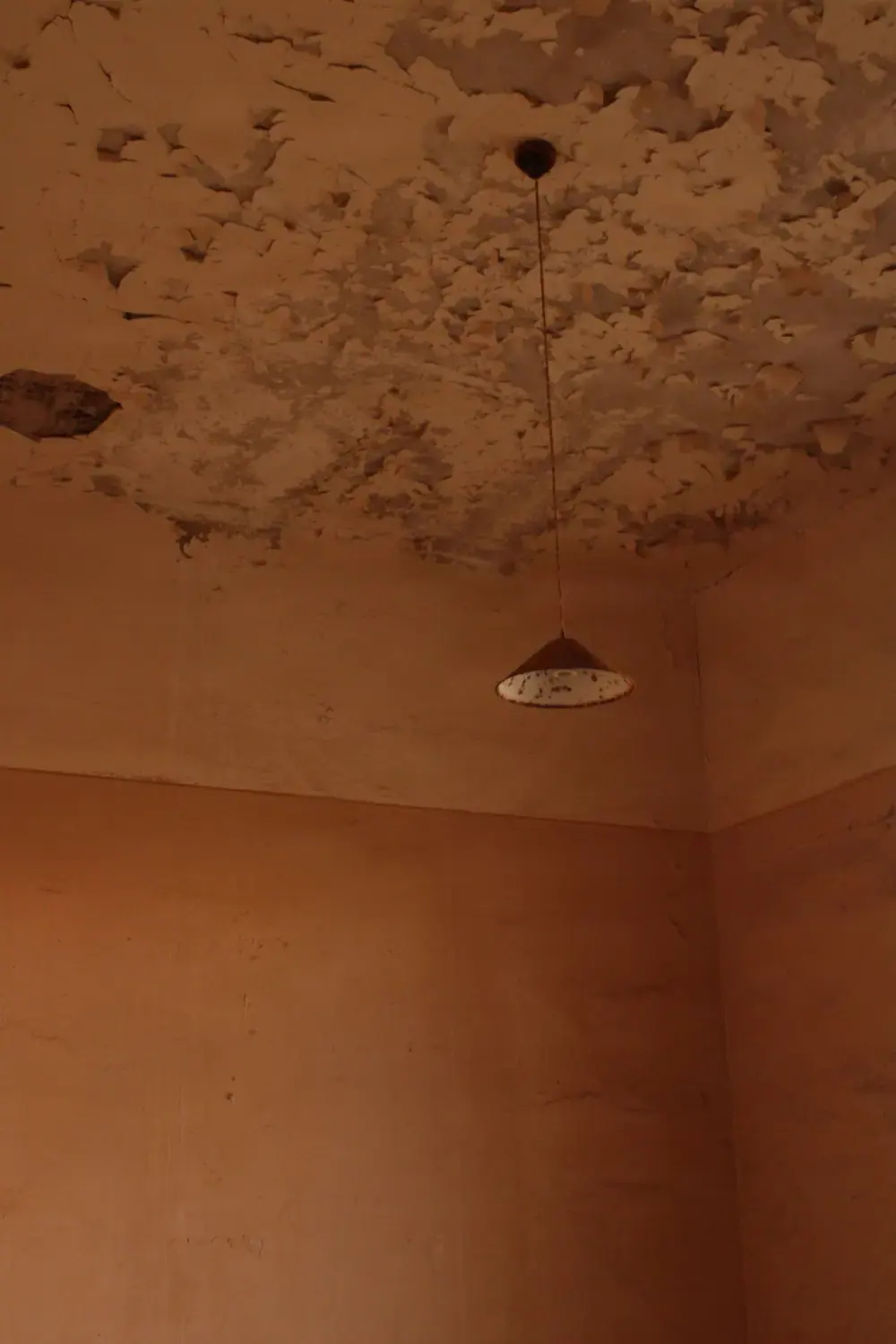
Some damage is plain to see, and some grows a little each season. These are the signs worth a call.
- Holes. From a doorknob, a shelf anchor, a TV mount or moving day.
- Dents. Chair backs and furniture crush the gypsum without breaking the paper face.
- Seam cracks. A straight line where two sheets meet, often running up from the corner of a door or window.
- Corner cracks. A split along the line where the ceiling meets the wall.
- Nail pops. Small round bumps in a line across a ceiling, one over each joist.
- Water stains. A yellow or brown ring, bubbling paint, board that gives when pressed.
- Outdated textures. Heavy stipple, swirls or a sprayed ceiling. See popcorn ceiling and texture removal.
Most of this is surface damage, and a patch is the right fix. A crack that keeps widening, a door that starts to stick or a sagging ceiling points to something behind the wall, and that cause needs a look first.
How a Drywall Patch Is Done, Step by Step
A patch that vanishes under paint comes from the steps, not from a thick smear of mud. Nail and anchor holes are filled with joint compound, filled again once the first pass shrinks, and sanded. A doorknob hole is squared off clean and covered with a mesh patch, or with a piece of board whose paper is left on as a flange. A larger opening gets wood backing strips behind its edges, or is cut back to the nearest studs, and a new piece of drywall goes in.
Then every patch follows the same order.
- Tape. Seams around a new piece get tape bedded in compound, so the edge cannot open.
- Thin coats. Thick compound shrinks and cracks as it dries. Two or three thin layers, each dry before the next, stay flat.
- Feather wide. Each coat reaches past the last, so the patch tapers into the wall instead of standing up as a hump that shows in window light.
- Sand and check. A light sanding, then a work light held flat against the surface.
- Prime. Bare compound soaks up paint differently from the finished wall around it. Without primer it shows through as a dull spot, which painters call flashing.
- Texture. Orange peel or knockdown is sprayed or applied by hand to blend in. A smooth wall gets a smooth finish.
- Paint. Touch-up rarely matches a wall that has faded for years, so the wall is usually painted corner to corner.
We are painters too, so the patch and the finish coat come from one company. Our interior painting page explains how a whole room is done.
Nail Pops and Cracks Where the Ceiling Meets the Wall
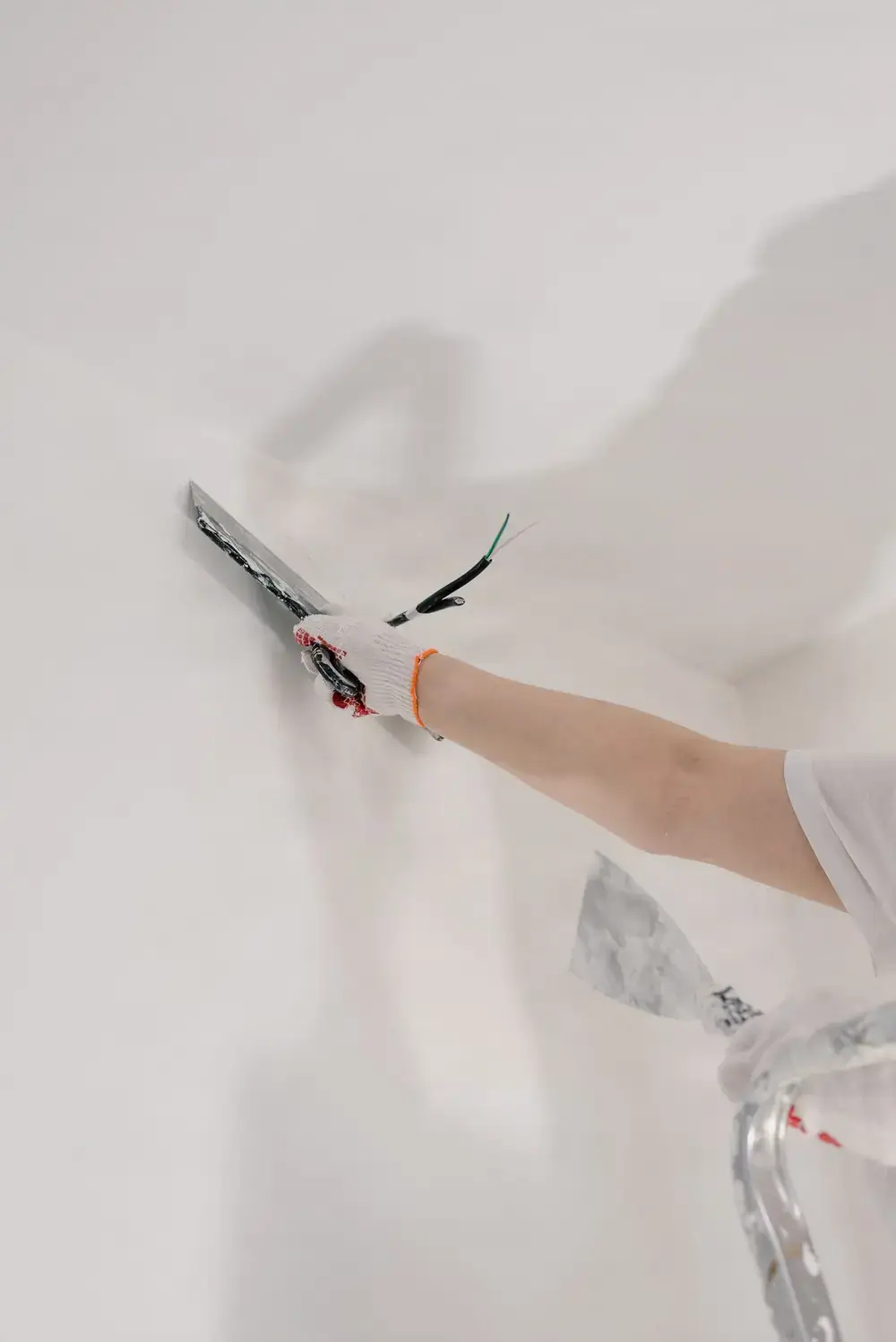
Nail pops in a drywall ceiling
A nail pop is a fastener head pushing out through the finish. Older drywall was usually hung with nails, and the framing lumber dried and shrank around them. Ohio weather keeps the wood moving. Dayton International Airport averages 11.05 inches of rain from June to August, and the year brings 109.9 days with a low at or below freezing, when the house is closed up and heated. Each swing in indoor humidity works a loose nail a little further out.
Filling over the head looks fine for a while, and then the pop returns. The better repair drives a drywall screw beside the nail to pull the board tight to the joist, sets or removes the old nail, fills both, sands and primes. After that, the whole ceiling is usually repainted.
Cracks where the ceiling meets the wall
An inside corner joins two surfaces that move separately. The ceiling hangs from joists or roof trusses, the wall stands on its plates, and the paper tape in the corner takes the strain. Trusses can arch upward slightly in winter, when the attic is cold and the rooms below are heated, and lift the ceiling off the top of the wall. That gap often opens in winter and closes in summer.
The fix cuts out the loose tape, beds new tape in compound and feathers both sides. Flexible corner tape helps where the gap moves. No patch stops framing from moving, so when a crack looks seasonal, you will hear that from us before the work starts. In mid-century houses like those of Kettering, where the median home dates from 1961, settling shows in these corners and above door frames first.
Water-Damaged Drywall: Fix the Leak First
A ceiling stain under a bathroom or bubbling paint under a window means water got in. The leak comes first, and that is work for a plumber or a roofer. With 41.33 inches of precipitation a year at Dayton International Airport, falling on 134.3 days, a small roof leak gets plenty of chances to show.
Once it is fixed and dry, the board decides the next step. Drywall is a gypsum core between two sheets of paper. If it dried firm, a stain-blocking primer seals the mark, because ordinary paint lets a water stain bleed back through. If it went soft, sagged, or the paper peeled from the core, it has lost its strength. That section is cut out to sound board, and a new piece goes in like any other patch.
Plaster vs Drywall in Older Dayton Homes
Not every wall in Dayton is drywall. The National Park Service's Preservation Brief 21 says “plaster was the wall surface chosen for nearly all buildings until the 1930s or 40s,” and “by the late 1930s, rock lath was used almost exclusively in residential plastering,” meaning gypsum board as the base under the plaster. The US Census counts 48.4% of Dayton's homes as built before 1950, and 36.7% in 1939 or earlier. A house that old very likely has plaster walls.
Knock to tell. Plaster sounds hard and solid, drywall hollow between the studs, and a pushpin slides into drywall but stops in plaster. Plaster goes on in coats over wood or rock lath, and a crack often means it has started to pull away from the lath. A drywall patch over a loose area does not fix that, so if your home has plaster walls, tell us when you call.
Age matters for paint too. The EPA's Renovation, Repair and Painting Program page says: “In 1978, the federal government banned the sale of lead-based paint for use in homes.” Sanding a patch on an older wall also sands the old paint around it. Tell us the year your home was built when you ask for an estimate.
Repair or Replace, and What Decides the Price
Most damage is repaired, not replaced. A sheet comes out when it is soaked or crumbling over a large area, when a wall was opened for a plumber or an electrician, or when old patches have left a surface no feathering will flatten. Our drywall installation page covers hanging new board.
The price depends on the job in front of us, not a chart. These are the things that decide it.
- Number and size. A dozen anchor holes is a different job from a ceiling full of nail pops.
- Wall or ceiling. Overhead work needs ladders or planks and more care with dust.
- Texture. Matching orange peel or knockdown adds a step.
- Water damage. Cutting out and replacing board is more work than sealing a stain.
- Paint. A primed patch ready for your own paint, or the whole wall or room painted.
- Plaster or drywall. The answer changes the job.
Our hours are every day, 7 AM to 9 PM.
Got Holes, Cracks or Nail Pops?
Call or text (937) 829-8873 for a free estimate.
Questions We Hear a Lot

-
No two repairs are priced the same, because the work differs: a few anchor holes, a doorknob hole that needs a new piece, a ceiling of nail pops, or a soaked section to cut out. Texture matching and how much painting follows count too. A free estimate at (937) 829-8873 puts a price on yours.
-
Because the head was filled over while the nail itself stayed loose. As the joist dries and moves with the seasons, the head works its way out again. Pulling the board tight with a screw beside the old nail, then refilling and priming, deals with the cause instead of the bump.
-
The ceiling and the wall move separately, and the tape in that joint takes the strain. Roof trusses can lift a ceiling slightly in winter and let it settle in summer, so that crack may open and close with the seasons. Re-taping with flexible corner tape is the usual fix.
-
Usually, yes. Paint fades and dulls over the years, so fresh touch-up paint stands out, and an unprimed patch shows as a dull spot. Priming the patch and painting the wall from corner to corner gives one even color and sheen.
-
Yes. Call or text us at (937) 829-8873 for your free estimate.
-
We proudly serve Dayton, Ohio and surrounding areas. Call or text (937) 829-8873 to check your location.
Ready to Get Started?
Call or text AMR Home Services at (937) 829-8873 for a free estimate.
-
- Service Area Dayton, Ohio
& surrounding areas - Working Hours Mon–Sun: 7 AM–9 PM
-


